
The repair crew drives out to look, then drives back for the parts.
KIM 4 Industry is the field operations platform, from the job done in the field to the record that closes it. In agriculture the machines break down in the middle of a field, in the middle of the season, and the first trip is usually spent finding out what is wrong.
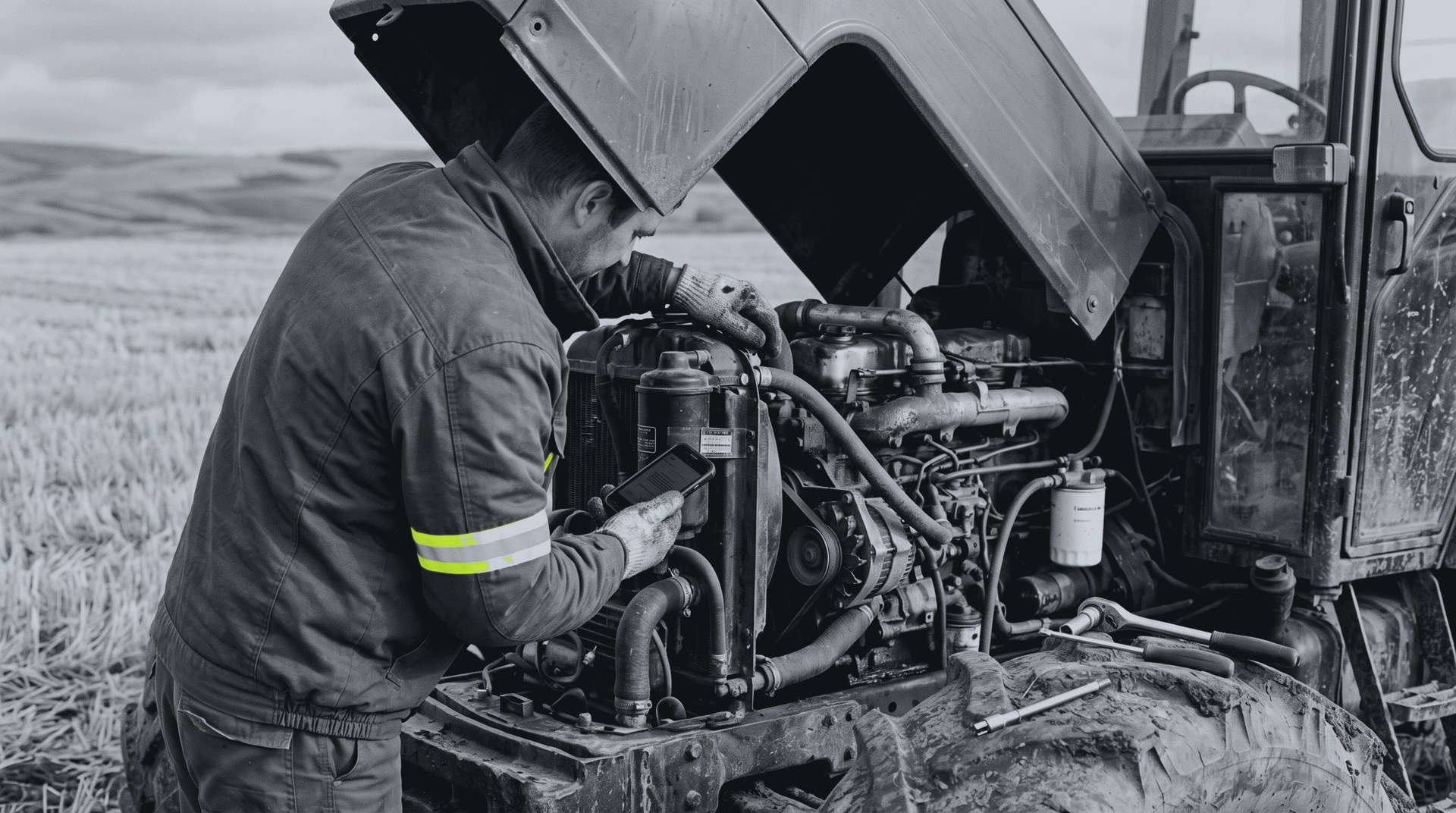
Image built with AI, for illustration.
Two trips for one repair.
Tractors and farm machinery work far from the workshop. When one breaks down, the driver phones in, the crew drives out to see the problem, and more often than not drives back to fetch the part. In the season, that second trip is a day the machine does not work.
What goes missingFour things the first phone call does not carry.
- Which machine. The serial number, not “the green one by the canal”.
- Where it is. A field is not an address.
- What it needs. Tools and parts, decided before the crew leaves.
- Its history. The last repair, and what went into it.
One scan on the dashboard, and the crew leaves prepared.
- 01the driver scans the tag on the dashboard
- 02the request arrives with the serial number and the GPS position
- 03the crew sees the history and loads the right tools and parts
- 04the job is closed in the field, offline if needed
- 05the part comes off the service stock with its record
The machine’s history stays with the machine, whoever repairs it next.
Image built with AI, for illustration.
“He just scans it.”
The repair crew knows the tractor’s serial number, knows which tools to bring, and, most importantly, knows where the tractor is.
Count the second trips.
We publish no figure for this sector until a client gives us one. The inputs we ask for:
- how many machines you service;
- how many call-outs in a season;
- how many of them need a second trip for parts.
An area of application.
We have no agricultural client we can name. The mechanism is the one of KIM for Field Services, in use since 2014.
How many machines, and how far from the workshop?
We prepare the demo on your fleet and your service routine.