
Three shops break down before lunch. The technician goes to whoever calls loudest.
KIM 4 Industry is the field operations platform, from the job done in the field to the record that closes it. A retail network has equipment in every shop, assets that move at every opening and closing, and a maintenance team that has to decide where to go first.
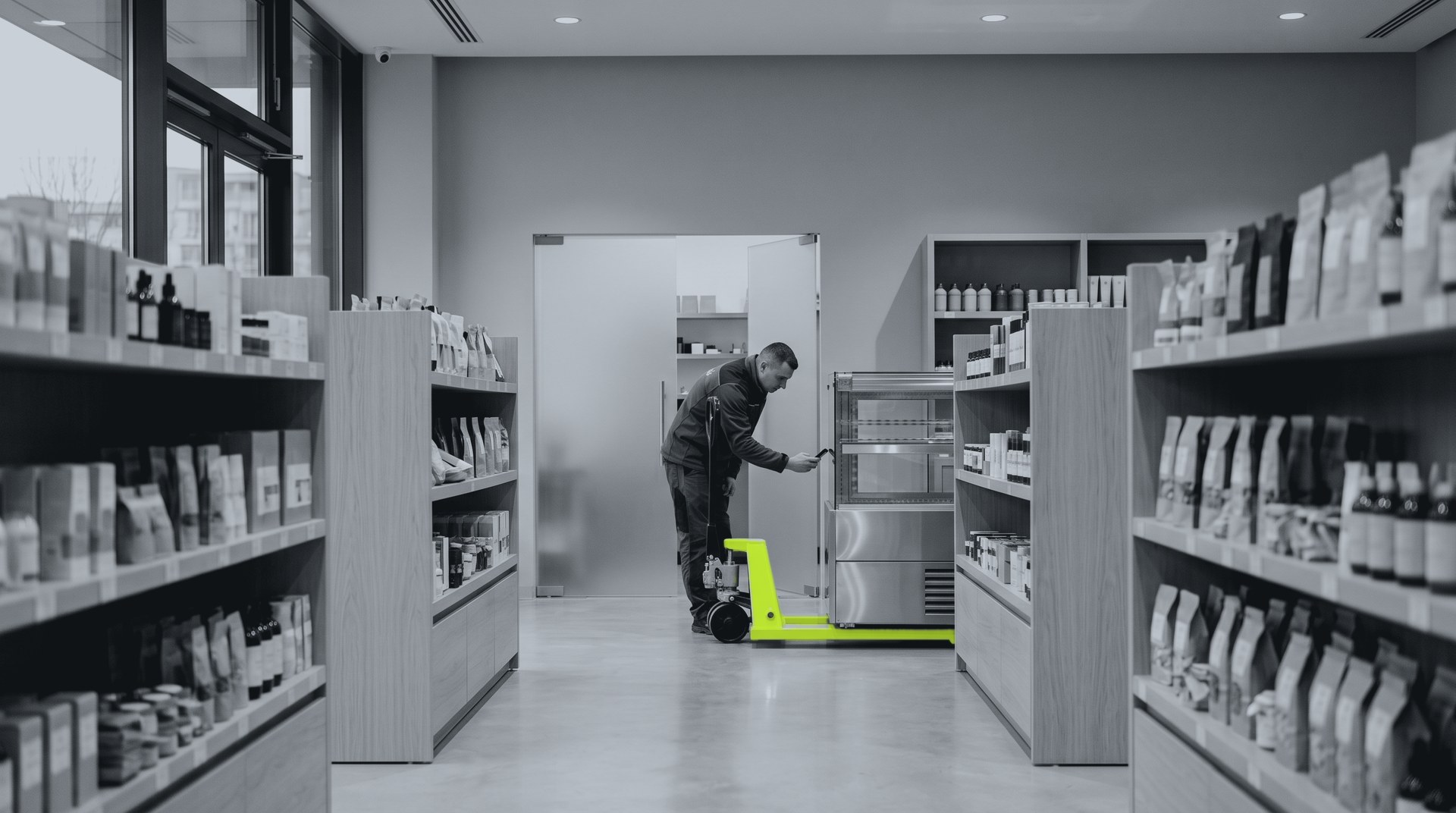
Image built with AI, for illustration.
Priority by phone volume.
A chiller fails in one shop, a till in another, the air conditioning in a third, all before lunch. Whoever gets through first gets the technician, and that is not the same as whoever is losing the most sales. Meanwhile assets move between shops, and where each one ended up lives in somebody’s memory until the annual count.
What you own, where it is and who is using it.
- 01the request comes in with the location and a photo
- 02the priority is visible to the whole team
- 03the technician closes the job on the spot
- 04an asset is scanned when it leaves one shop and when it arrives at another
- 05the count is done per shop, while it trades
Image built with AI, for illustration.
Count the searches.
Forty shops, three asset moves each a month: 120 moves. If 15% of them later take an hour to track down, that is eighteen hours a month, before counting the chiller that stays off for a day because a request was lost between two phone calls.
Worked example, KIM 4 Industry, September 2026 · inputs replaced with the client’s own figures“They all have equipment that can break down.”
No retail client yet.
What this page describes is the mechanism, the same one that runs for facility management and pharmacy networks.
- What we do not claim: no integration with tills or sales systems.
How many shops, and how often do assets move?
We prepare the demo on your network.