
Hundreds of people on the platform, and nobody sure which slings are still certified.
KIM 4 Industry is the field operations platform, from the job done in the field to the record that closes it. During a turnaround, every tool and piece of lifting equipment carries a deadline, and a lapsed inspection is found out too late or not at all.

Image built with AI, for illustration.
A turnaround runs on deadlines nobody can see.
During a turnaround there are hundreds of people on the refinery platform, sometimes more. They use tools, slings and lifting gear, most of the time working at height. Every one of those items has an inspection with an expiry date, and the date lives in a register, not on the item.
So the question that matters most on the platform is the one nobody can answer quickly: is this piece of equipment still valid?
What goes missingFour things that stay in the register instead of on the item.
- The inspection status. Checked in the office, if it is checked at all.
- The documentation. In a different place from the tool it describes.
- Who took what. The tool store hands out hundreds of items a day.
- The inspector’s time. Spent looking for paper instead of looking at equipment.
Expired equipment does not leave the tool store.
- 01each item carries its own identity and its inspection dates
- 02the person who needs it scans it at the tool store
- 03if an inspection has lapsed, the handover is refused
- 04on the platform, the inspector scans the tag and sees the documentation
- 05the item returns, and the record shows who had it
The check moves from the office to the point where the risk is: the counter of the tool store and the platform itself.
Image built with AI, for illustration.
“The system won’t let them take it.”

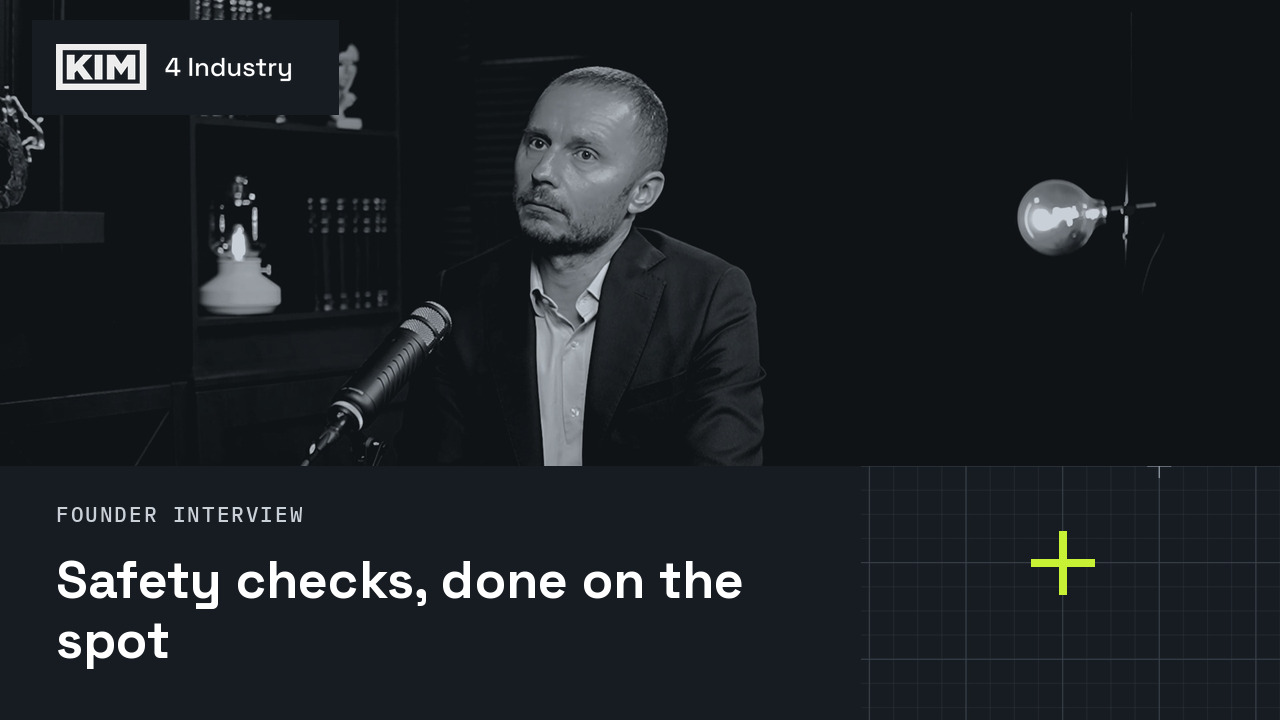
With us, nobody can even take that equipment out of the tool store if its ISCIR has expired.
Start from the size of the turnaround.
We publish no figure here until a client gives us one. These are the inputs we ask for in the first conversation:
- how many people and how many items of equipment go into a turnaround;
- how many of those items carry periodic inspections;
- how the inspection status is checked today, and by whom.
Refinery work with Kraftanlagen, in Romania, Austria and Germany.
The system went into refinery and construction work with Kraftanlagen in Romania and was extended to Austria and Germany on the same principle of transparent traceability. On the German side it integrates with SAP; elsewhere, with the ERP already in place.
When is your next turnaround, and how many items go through the tool store?
We prepare the demo on your equipment register and your inspection types.