
Teams and assets in places where the manager isn’t.
KIM 4 Industry is the field operations platform, from the job done in the field to the record that closes it. A pharmacy, a shop and a branch have the same problem in different clothes: someone reports a fault, someone else drives out, a third person uses a part, and the records are written last.
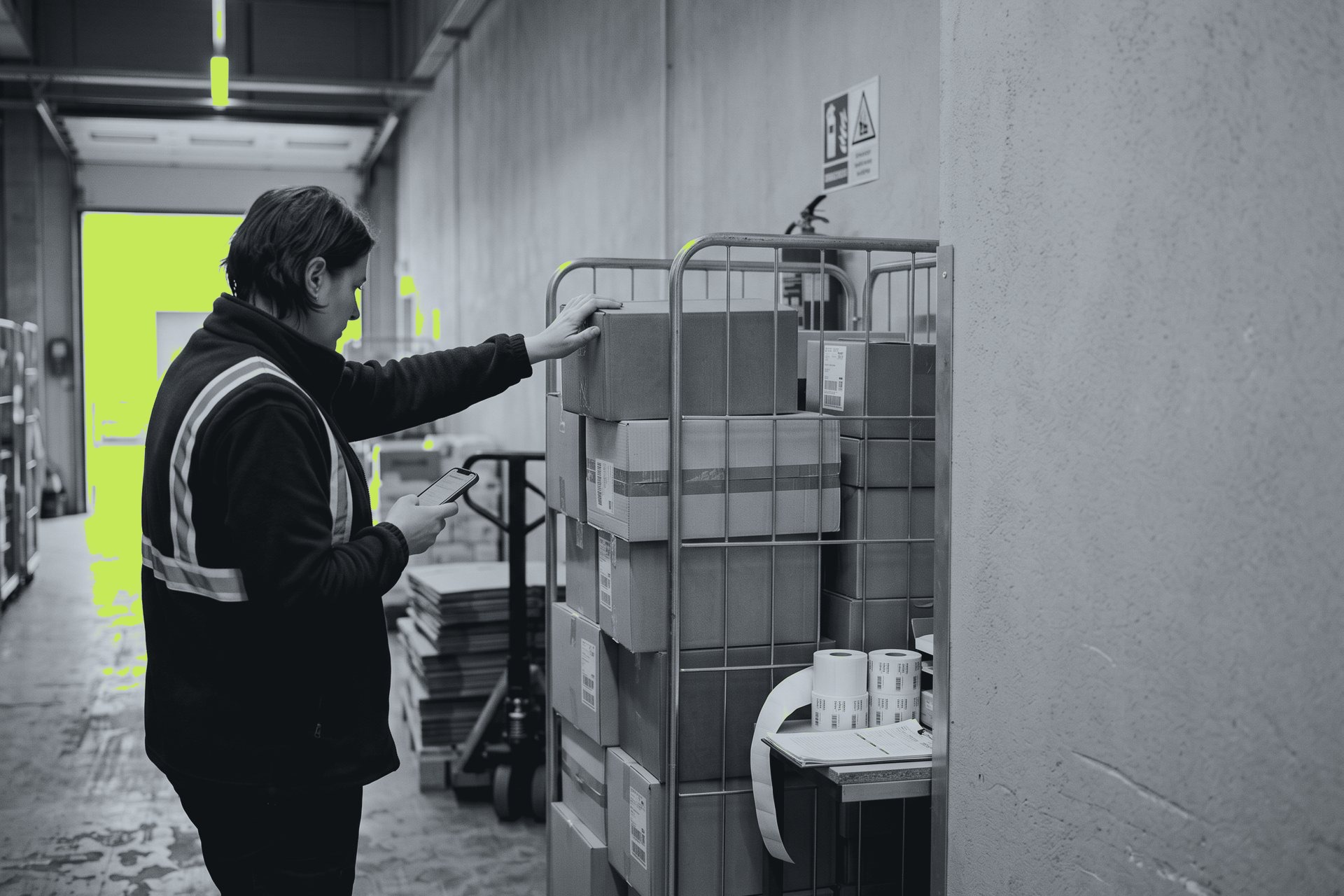
Image built with AI, for illustration.
Different vocabulary, same mechanism.
Between the moment the work happens and the moment it appears in the records, hours or days go by. What gets lost on the way is what costs: what was used, how long it took, who was there, what was promised to the customer.
What separates a factory from a pharmacy chain is the vocabulary and the sense of urgency, while the mechanism holds. So the platform is the same and only the scenarios differ. All four start with KIM for Field Services, and Logistics follows when the parts and the asset movements need their own records.
A shop does not have softer requirements than a refinery. It has the same ones, at a different scale.
“They all have equipment that can break down.”
The same platform, told in the vocabulary of your sector.
Construction
The delivery note says the goods left. What each project received and used, recorded as it happens.
Materials and tools per project →Oil and gas
Equipment with a lapsed inspection does not leave the tool store.
Turnarounds and inspections →Energy
The legal deadline travels with the item, and the check happens where the equipment is.
Periodic inspections →Agriculture
One scan on the dashboard, and the crew leaves with the right parts.
Machinery service in the field →Facility management
The request starts with a scan at the location. In production today.
Tenant requests →Pharmacy chains
Every repair keeps its materials and the unit keeps its history.
Requests and equipment history →Retail
What you own, where it is and who is using it.
Store equipment and asset moves →Branch networks
The arrival time is recorded in the field, at the moment of arrival.
Distributed equipment →The report to your client comes out of the same data the work was done with.
Requests arrive from several buildings, on whatever channel the tenant uses. Some are handled by your own crew, some by a subcontractor. At month end somebody reconstructs what happened from five files.
This is the one case where the mechanism is already validated in production, because the requester role exists in the product and is in use.
- 01the tenant raises the request, with a photo and a location
- 02the dispatcher assigns it, with an owner and a deadline
- 03the crew closes it at the location, with the materials used
- 04the report to the client comes out of the same data
We do not present ourselves as a building management suite. Managing the space is a different job; we digitalize the operation that serves it.
Image built with AI, for illustration.
The request arrives with a photo, a time and the part that was used.
The pharmacist writes that the fridge is not holding temperature. The message reaches a dispatcher, who calls a technician, who drives out. What was changed, which part went in and whether the unit is still under warranty is found out later, if at all. Nobody is at fault in that chain. It is made of three handovers, and each one drops something.
The hard part is not the repair. It is knowing that this is the third time the same unit has failed, and that is what the history on the equipment gives you.
- What we do not claim: nothing about pharmaceutical compliance, and nothing about temperature as a promise of the system. The norms are not ours to certify.
What you own, where it is and who is using it, including in the shop 200 kilometers away.
A chiller fails in one shop, a till in another, the air conditioning in a third, all before lunch. Whoever gets through on the phone first gets the technician, and that is not the same as whoever is losing the most sales. Meanwhile assets move at openings and closings, and where each one ended up lives in somebody’s memory until the annual count says otherwise.
Scan the asset when it leaves and when it arrives. Count per shop, while the shop trades.
- What we do not claim: no integration with tills or sales systems. We stop at the equipment, the job, the asset and the record.
- No retail client yet. What this section describes is the mechanism.
Image built with AI, for illustration.
The arrival time is recorded in the field, at the moment of arrival.
Equipment sits in dozens or hundreds of locations, each with its own access rules and its own contractual response time. The job gets done; proving it was done on time is the hard part, because the evidence is assembled afterwards from several sources.
The technician scans the equipment tag on arrival. The arrival time enters the record there and then, and the contractual report is generated from what was recorded.
- No client in this vertical. There are no availability figures here, no uptime percentages and no implied implementation. Those are the first claims a buyer in this sector checks.
Verified where failure is not an option.
Count the phone calls.
A worked example for a network of locations, with the inputs in the open.
Sixty locations, two requests each per month, twenty minutes lost per request before anyone turns a screwdriver. Nobody invoices those hours.
Worked example, KIM 4 Industry, September 2026 · inputs replaced with the client’s own figuresStraight answers.
How many locations, and who covers them?
The mechanism is the same whatever the building is called, and the demo is built on your own locations.