
The goods leave with a delivery note. What happens to them on the project stays unknown until it closes.
KIM 4 Industry is the field operations platform, from the job done in the field to the record that closes it. On a construction project the break sits between the delivery note and the handover: goods are sent, and their consumption only shows up when the project ends.
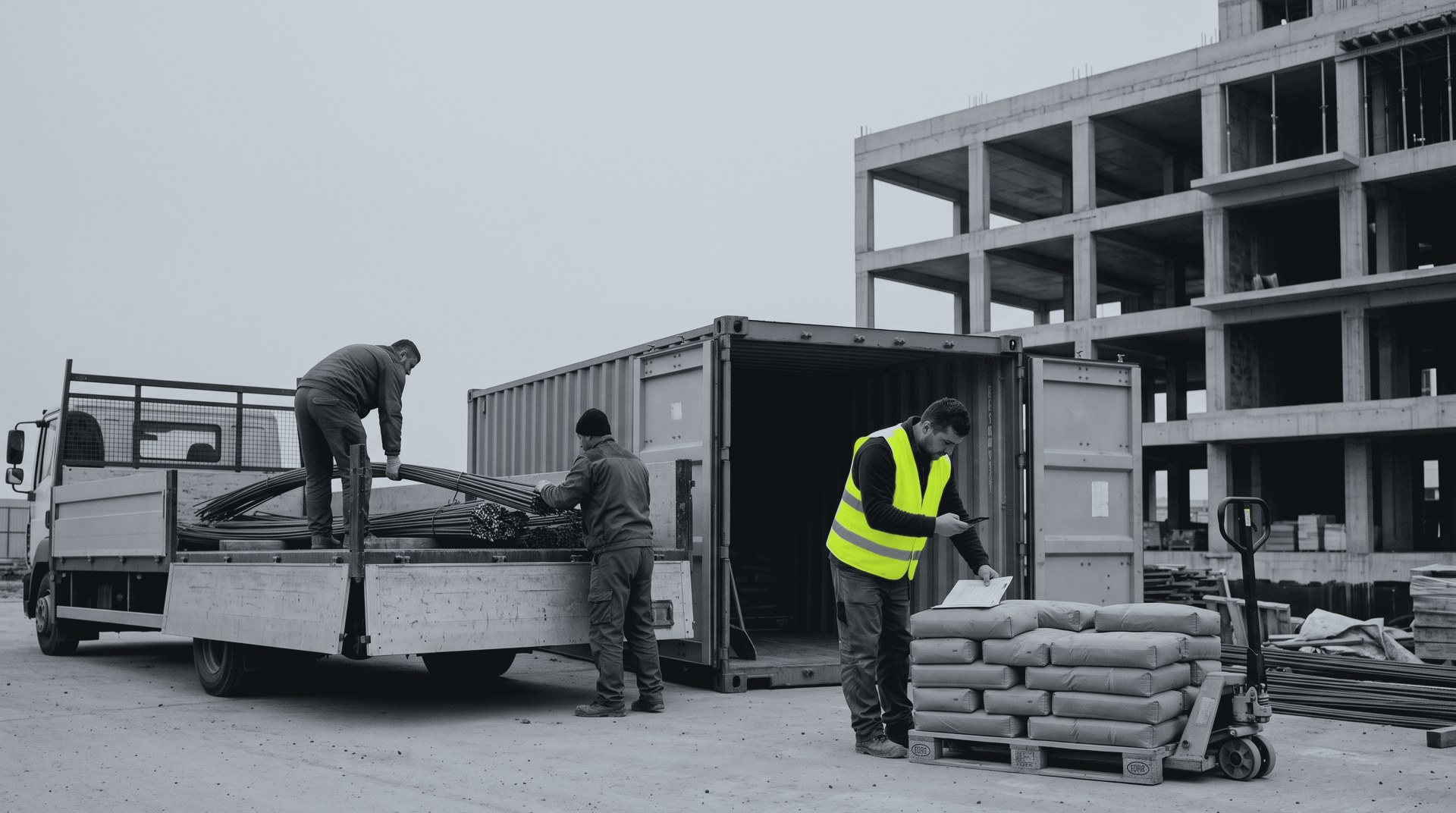
Image built with AI, for illustration.
Sent is not the same as received.
On an ordinary morning, someone in accounting enters a delivery note and the goods go out to the project. From that point the office knows only that they were sent. Whether all of it arrived, what was used, what was lost or moved to another job is found out at the end, when the project is closed and the numbers no longer change anything.
Tools follow the same path. A drill leaves the tool store, changes hands twice, and turns up missing at the stock count.
What goes missingFive things the project loses along the way.
- The difference between sent and arrived. Nobody counts it on the day.
- Consumption per project. Materials allocated in bulk are spent without a record of where.
- Losses. They surface as a single number at the end, with no trace of when they happened.
- The right moment to restock. Ordered when someone notices, not when the data says so.
- Where the tool is. Held in someone’s memory until the count says otherwise.
The project receives the goods on a phone, and every material is scanned as it is used.
- 01the delivery note is entered, as today
- 02on the project, the goods are received on a phone, exactly as they arrived
- 03each material is scanned when it is used
- 04consumption per project is visible in real time
- 05restocking is triggered by the data, and the record goes back to accounting
Tools get one identity for life: a QR code at goods receipt, a scan at every handover, a write-off at the end. When something goes wrong with a tool, the record shows whose hands it was in.
Image built with AI, for illustration.
“That’s where the trail goes cold.”
Once the goods have left, someone on the project receives them with a smartphone, exactly what arrived, and every material used on the project is scanned.
Start from the gap you find at handover.
We do not publish a figure for this sector until a client gives us one. In the first conversation, these are the inputs we ask for, and the worked example is built on them, in the open:
- the value of materials allocated to a typical project;
- the difference found at close between what was allocated and what was used;
- how many tools are in circulation, and how many are missing at the annual count.
Traceability on construction and assembly projects, in three countries.
The work with Kraftanlagen started in Romania, from the need for traceability on construction projects and in refineries, and then extended to Austria and Germany on the same principle: one badge for every item, from the moment a person clocks in to the moment they leave through the gate.

How many projects do you run at once, and who receives the goods on each?
Tell us how materials and tools move today. We prepare the demo on that flow, with KIM for Logistics first and Field Services where the crews need it.